Patients with respiratory disease often experience breathlessness – a symptom they describe as urgent and highly distressing. Relieving breathlessness is a key treatment priority, and new or worsening symptoms are often what prompt patients to seek medical care. Early identification and accurate diagnosis of the underlying causes are essential for effective management and better patient outcomes. However, because breathlessness can result from many conditions – including cardiac problems, anaemia and various respiratory diseases – fewer than 30 per cent of breathlessness-related diagnoses made in primary care align with the final diagnosis made by a specialist[4].
Current lung diagnostic techniques have limitations: they are often insensitive for early detection of lung disease and ineffective for monitoring disease progression or treatment response. The key indicators for lung conditions are changes in the structure of the lung and how they perform their vital functions, specifically how air moves in and out (ventilation) and how blood flows through them (perfusion). No single diagnostic technique currently available can provide definitive information on both these critical aspects simultaneously. Existing tests tend to focus either on the lung’s physical structure or offer only an approximation of its functional changes. This forces clinicians to either order a battery of tests or rely on limited tests to inform diagnosis and management. These limitations can lead to delayed diagnoses, underdiagnosis and misdiagnosis, significantly affecting patients’ health outcomes and quality of life.
Melbourne-based global medtech company 4DMedical is developing a solution for this diagnostic challenge.
A frontrunner in functional lung imaging
Established in 2013, 4DMedical has created a portfolio of Software-as-a-Service (SaaS) technology to derive functional lung health insights from conventional X-rays and computerised tomography (CT) scans without the use of radioactive tracers or contrast agents.
These software products have been approved by the Therapeutic Goods Administration (TGA) and the US Food and Drug Administration (FDA), with 9 FDA cleared and 3 already achieving reimbursement in the US.
4DMedical is a significant contributor to Australia’s medtech ecosystem, with all core research and development (R&D) performed at its Melbourne headquarters. The company employs 92 of its 124 staff in Australia, fostering local talent and ensuring its innovative technology is designed, developed and manufactured locally. It has also expanded operations to the US with an office in Los Angeles, California.
Supported by a Medical Research Future Fund (MRFF) Frontier Health and Medical Research grant in 2021, 4DMedical has advanced its four-dimensional lung imaging technology by developing a dedicated lung scanner – the XV Scanner™. This device uses X-ray velocimetry (XV) to visualise ventilation in lung tissue, allowing clinicians to observe airflow with higher detail, greater accuracy and a lower radiation dose than existing methods. A clinical trial is currently underway at the University of New South Wales to evaluate the scanner.
In 2023, 4DMedical was awarded $1.1 million in funding from MTPConnect’s Clinical Translation and Commercialisation Medtech (CTCM) program to further enhance this lung scanner device, specifically to integrate perfusion measurement functionality into the same scan (XVD), expanding its diagnostic utility.
Clinical validation through global collaboration
With guidance and support from MTPConnect and its program partner, Medical Technology Association Australia (MTAA), 4DMedical successfully demonstrated technical proof-of-feasibility of utilising the novel XVD technology to measure perfusion through preclinical large animal studies at the South Australian Health and Medical Research Institute (SAHMRI).
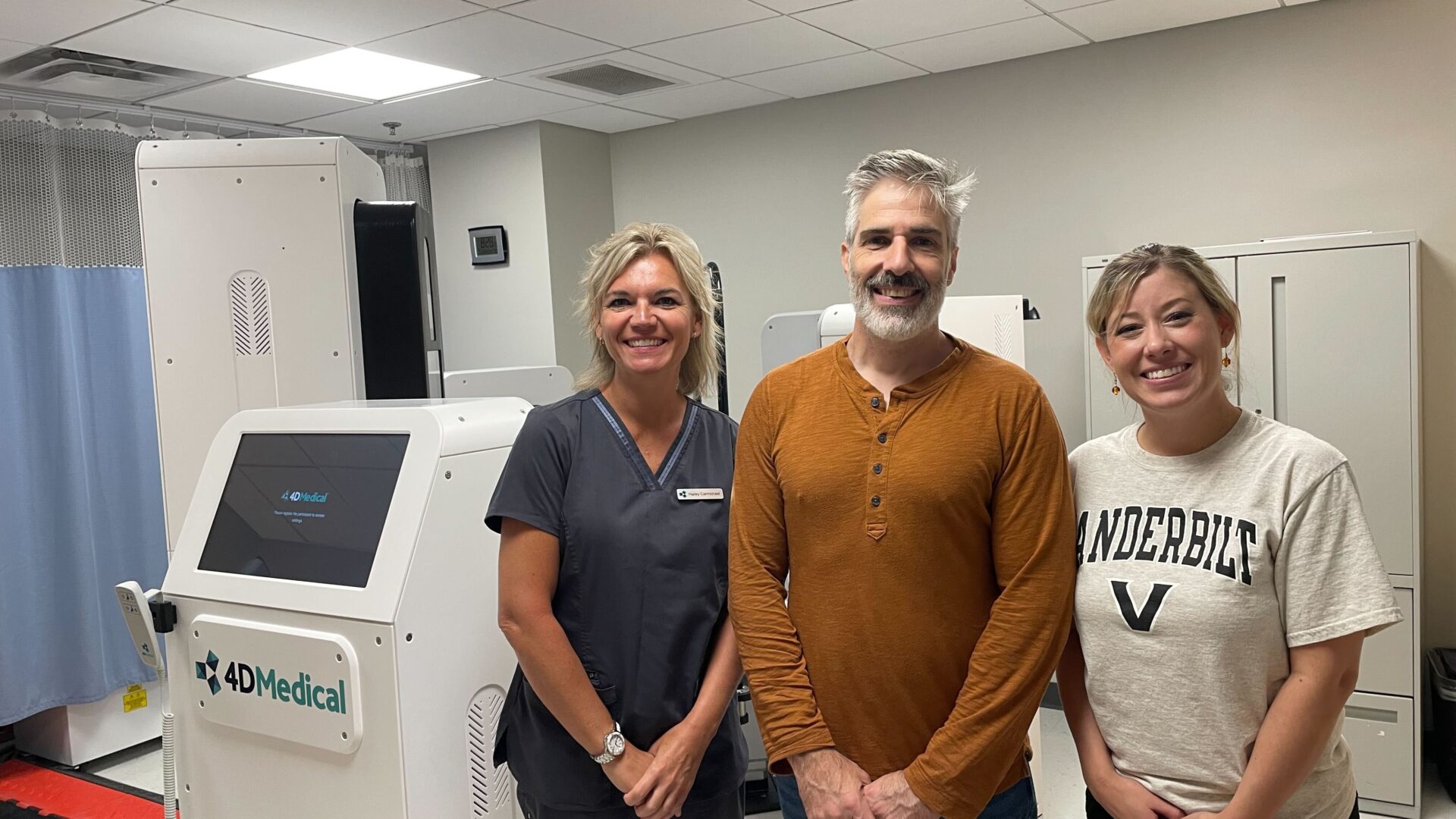
4DMedical also achieved clinical validation of its device’s perfusion scanning capability through a pivotal collaboration with Vanderbilt University Medical Center. This first-in-human clinical trial has successfully scanned 69 human volunteers, including both healthy controls and participants with a range of respiratory diseases.
“We’re now able to see the invisible,” said Dr Bradley Richmond, Pulmonologist and Co-Lead Investigator at Vanderbilt University alongside Dr Michael Lester. “[This] technology gives us a window into parts of the lung we’ve never been able to assess so precisely before. It could transform care for patients whose symptoms were previously a mystery.”
Building on this momentum, 4DMedical has also initiated a clinical trial at a second US site, at the University of Miami. While the clinical trials are ongoing, the dataset generated has already proven valuable. 4DMedical used the XVD images to develop a statistical model for a “lung mask” – a 3D map of the lung region previously derived from a paired CT scan. Using this statistical model, the team has developed a software prototype that generates a lung mask to analyse XVD scans without requiring an additional CT scan. This innovation has the potential to lower costs for patients and significantly reduce their radiation exposure.
“This CTCM project has generated a world first: the ability to see and measure regional lung perfusion,” said Dr Tim O’Meara, Director of Government and Research Strategy at 4DMedical.
“When combined with regional lung ventilation measured from the same scan, we can see and measure, for the first time, how well a patient’s lungs are functioning, without exposing them to toxic contrast agents or radioactive tracers.”
Partnerships driving a shared mission
4DMedical also gained a valuable partner in global healthcare company Philips. In September 2024 the company signed a comprehensive distribution agreement with Philips, leveraging the company’s long-established and significant commercial partnerships with both the US Department of Veterans Affairs and the US Department of Defense. Under this agreement, Philips holds exclusive distribution rights to 4DMedical’s suite of products for US government customers and non-exclusive rights for all other US customers.
In a similar vein, Vanderbilt University Medical Center, a US Veterans Affairs clinical site, has also proven to be a strategic partner in 4DMedical’s efforts to advance non-invasive lung diagnostic technologies for US veterans, particularly those exposed to airborne toxins.
These partnerships pave the way for 4DMedical to expand healthcare accessibility for veterans, underscoring a shared commitment to improving cardiothoracic imaging and addressing the unique needs of this vulnerable population.
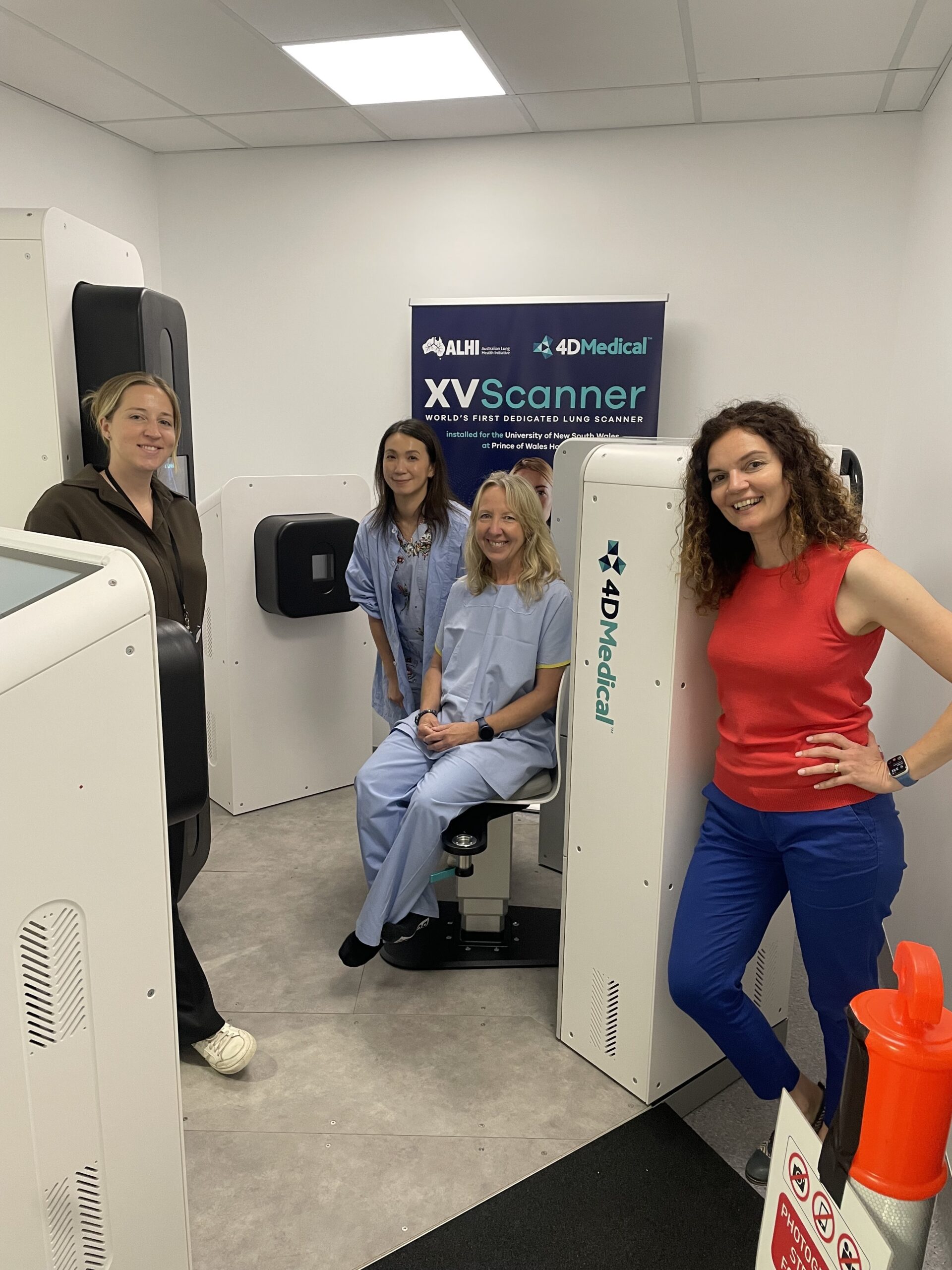
4DMedical engineers and clinical teams with collaborators at the each site where scanning commenced during this CTCM project: Vanderbilt University
Building momentum towards widespread adoption
Support from the CTCM program has enabled 4DMedical to undertake a comprehensive Australian market access feasibility assessment with Pulse Economics to determine the best way forward for market entry and reimbursement success. This assessment evaluated patient populations, market dynamics, reimbursement pathways and economic value proposition of 4DMedical’s technology. The findings have helped refine the company’s commercialisation strategy including the prioritisation of target markets, the design of future clinical studies to support adoption, and the identification of potential partners to facilitate market access.
Looking ahead, 4DMedical is advancing at full pace, driving forward its entire portfolio of lung imaging hardware and software. During the CTCM funding period, the company raised $47.5 million through two capital raises and secured a $1.9 million Cooperative Research Centres Projects (CRC-P) grant to conduct clinical trials for its new CT:VQ™ software, which measures perfusion directly from CT scans.
For the XV Scanner™, 4DMedical’s next steps focus on completing and publishing ongoing clinical studies, with promising preliminary data already presented at several international conferences. In parallel, the company is pursuing a licensing agreement with a global healthcare or imaging partner to support large-scale manufacturing and commercialisation of the device.
With a clear road map, growing clinical evidence base and strong investor and partner support, 4DMedical is well placed to translate its innovative lung function scanner technologies into widespread clinical adoption, impact respiratory healthcare and secure commercial availability.
[1] https://www.healthdata.org/sites/default/files/2025-10/GBD_2023_Booklet_Final_2025.10.17.pdf
[4] https://lungfoundation.com.au/health-professionals/clinical-tools-and-training/breathlessness/