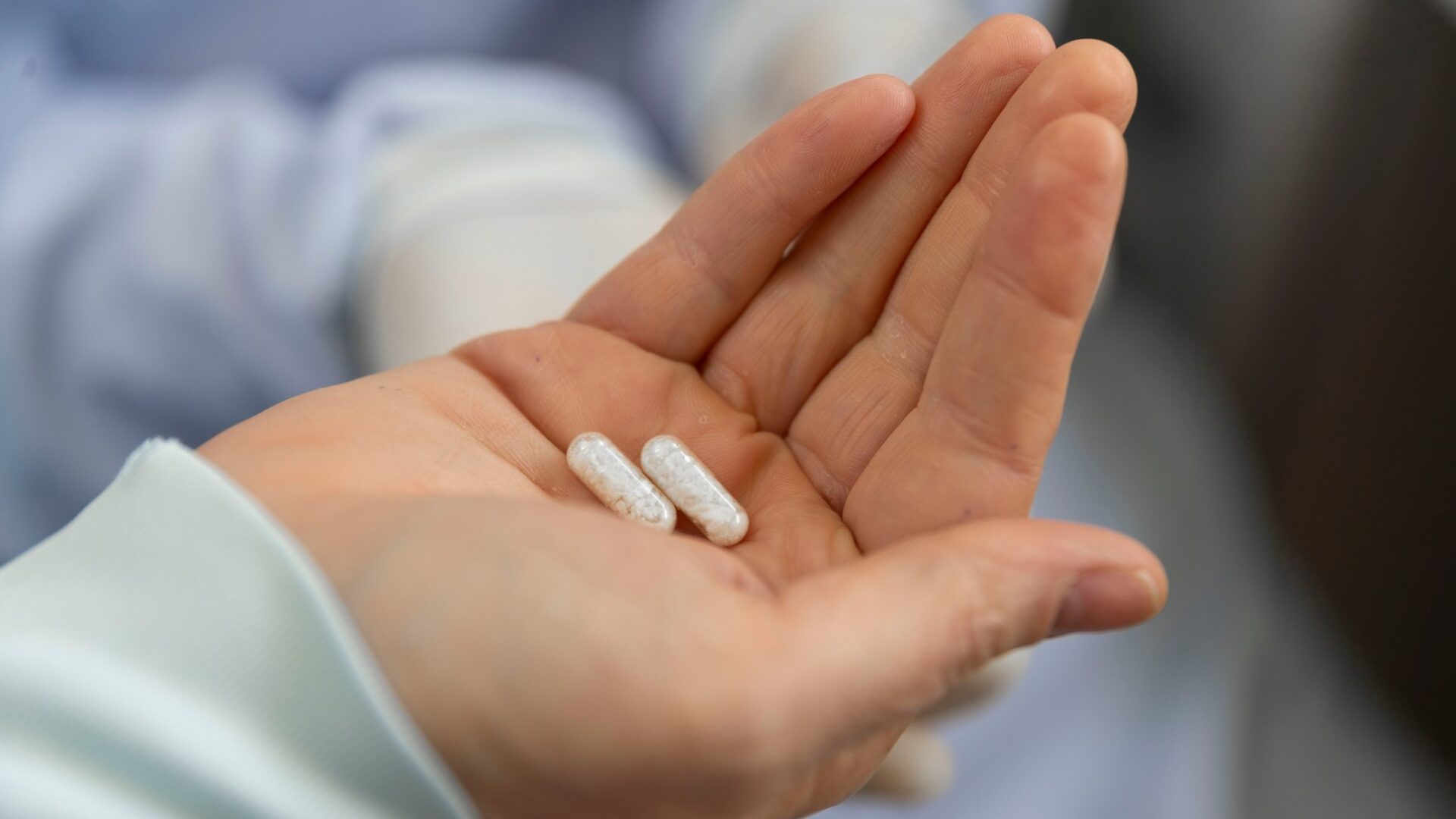
In most cases, this insulin is delivered via frequent injection under the skin several times a day. However, injectable insulin is associated with side effects including weight gain and hypoglycaemia.3 This, along with the pain, inconvenience and emotional and psychological distress of frequent injections highlights the need for alternative insulin delivery methods.
Direct health system expenditure for diabetes (Type 1 and 2) in Australia was estimated at $3.4 billion in 2020-21.4 However, when coupled with the indirect costs of diabetes including lower productivity and wellbeing, the total annual economic cost of diabetes is estimated at $17.6 billion.5 The global insulin market currently sits at USD 30.76 billion and is expected to reach USD 46.42 billion by 2035.6
Innovations for improving effective glucose management are of critical importance in the prevention of short- and long-term complications, enhancing quality of life and participation of people living with diabetes and reducing the economic impact.
Needle-free insulin delivered using nanotechnology
To address this significant unmet need, researchers from the University of Sydney are using nanotechnology to develop smart oral insulin in a pill that reacts to the body’s blood sugar levels and mimics the natural release of insulin – a potentially groundbreaking needle-free alternative for people living with insulin-dependent diabetes.
Usually when ingested, insulin breaks down quickly before it can lower blood glucose levels. To overcome this challenge, the research team’s solution involves attaching insulin to a nanoparticle, silver sulfide quantum dots, and coating it with a protective layer that helps the insulin reach the liver.
Here, the release of insulin is controlled by the breakdown of the protective coating in response to enzymes that break apart carbohydrates, the levels of which correlate with blood glucose increases following a meal, enabling the release of insulin when the body needs it. Excess drug particles that are not broken down are cleared from the body, preventing or reducing adverse effects of accumulation.
TTRA investment bridges critical gap
Prior to 2022, the team had shown that smart oral insulin was effective at lowering blood glucose levels in animal models, including non-human primates, and they had been able to produce the formulation at a research level in an academic laboratory.
As a result of this promising pre-clinical data, the team was awarded TTRA Research Project funding of $750,000 to take this smart oral insulin beyond the lab in preparation for human clinical trials, along with expert support from MTPConnect and TTRA partner UniQuest.
The funding enabled the team to scale beyond the academic setting, completing Chemistry, Manufacturing and Controls (CMC) development and engaging an external manufacturer to produce the smart oral insulin to Good Manufacturing Practice (GMP) grade. They were also able to complete Good Laboratory Practice (GLP) toxicology studies required for human ethics submission.
Project Lead Dr Nicholas Hunt explained that the TTRA investment was essential for making the oral insulin technology phase 1 ready.
“Getting oral insulin to the clinic is central to why we developed this technology to address challenges we saw in our hospitals. Prior to the TTRA investment, our work was beyond academic basic science, in the so-called ‘valley of death’ funding gap,” he said.
The ‘valley of death’ in drug development refers to the stage where a promising drug candidate struggles to find funding to translate from pre-clinical research into clinical trials. “The TTRA funding was the first commercially focused investment we had received to develop our technology and it kickstarted the investment needed to bridge the gap,” said Dr Hunt.
This led to further investment of $2.8 million from biotech incubator Proto Axiom, enabling the formation of a spin out company, Endo Axiom, to take the innovation the rest of the way.

Image left to right: Prof Victoria Cogger and A/P Nicholas Hunt.
Moving ahead with oral insulin clinical trials
As a result of the TTRA research project, spin out Endo Axiom is poised to take the smart oral insulin through a Phase 1a clinical trial to provide critical data on the safety and tolerability of the product in healthy individuals and to determine appropriate dosing for future trials.
The next step will be a Phase 1b trial in people with type 1 diabetes to assess the safety and tolerability of multiple daily doses of smart oral insulin. This trial will also provide preliminary data to demonstrate if smart oral insulin improves glucose control, reducing the frequency and severity of hypoglyceamic events.
Endo Axiom has secured new investment to support this next phase, including $1,079,424 from MTPConnect’s competitive TTRA for Drugs and Devices in 2025 along with $500,000 from the University of Sydney Pre-Seed Fund.
The rise in use of insulin pumps in conjunction with continuous glucose monitors has had a significantly positive impact for those living with diabetes. However, the equipment is expensive with subsidies in Australia not widely available and use requires a relatively high level of technological literacy. Calls to expand government subsidies for insulin pumps are, at this stage, still limited to people living with type 1 diabetes.7 There remains a need for new innovations to manage blood glucose levels for those living with any form of insulin-dependent diabetes.
Endo Axiom’s smart oral insulin addresses this need. Designed to be active in response to high blood glucose but inactive when blood glucose is low, the potential drug offers more than just convenience over injectable insulin.
Dr Sophie Kang, a researcher on the project that also lives with type 1 diabetes said, “it will make things simpler and will remove the stigma that people have.”
Stable and transportable at room temperature, and with no requirements for injector pens, needles, or cannulas, smart oral insulin has the potential to enhance equitable access to care for people living with diabetes, no matter where they live. It potentially offers a cheaper, more accessible alternative to insulin pumps. This, coupled with the benefits of reducing diabetes complications for individuals, families, carers and health systems makes smart oral insulin a vital addition to the tool kit for those living with insulin-dependent diabetes.
1. International Diabetes Federation (2025) Diabetes Atlas. 11th Edition.
2. Buse, J. B., Davies, M. J., Frier, B. M., & Philis-Tsimikas, A. (2021). 100 years on: the impact of the discovery of insulin on clinical outcomes. BMJ open diabetes research & care, 9(1), e002373. https://doi.org/10.1136/bmjdrc-2021-002373
3. National Diabetes Services Scheme, Benefits and side-effects of insulin https://www.ndss.com.au/about-diabetes/resources/find-a-resource/starting-insulin-booklet/benefits-and-side-effects-of-insulin/ accessed 7 July 2025
4. Australian Institute of Health and Welfare, Impact of Diabetes: Health System Expenditure https://www.aihw.gov.au/reports/diabetes/diabetes/contents/impact-of-diabetes/health-system-expenditure accessed 7 July 2025
5. Diabetes Australia, Diabetes in Australia https://www.diabetesaustralia.com.au/about-diabetes/diabetes-in-australia/ accessed 7 July 2025
6. Towards Healthcare (2026). Insulin Market Size and Companies. https://www.towardshealthcare.com/insights/global-insulin-market-size accessed 13 March 2026
7. House of Representatives Standing Committee on Health, Aged Care and Sport, The State of Diabetes Mellitus in Australia in 2024, June 2024 https://www.aph.gov.au/Parliamentary_Business/Committees/House/Health_Aged_Care_and_Sport/Inquiry_into_Diabetes/Report