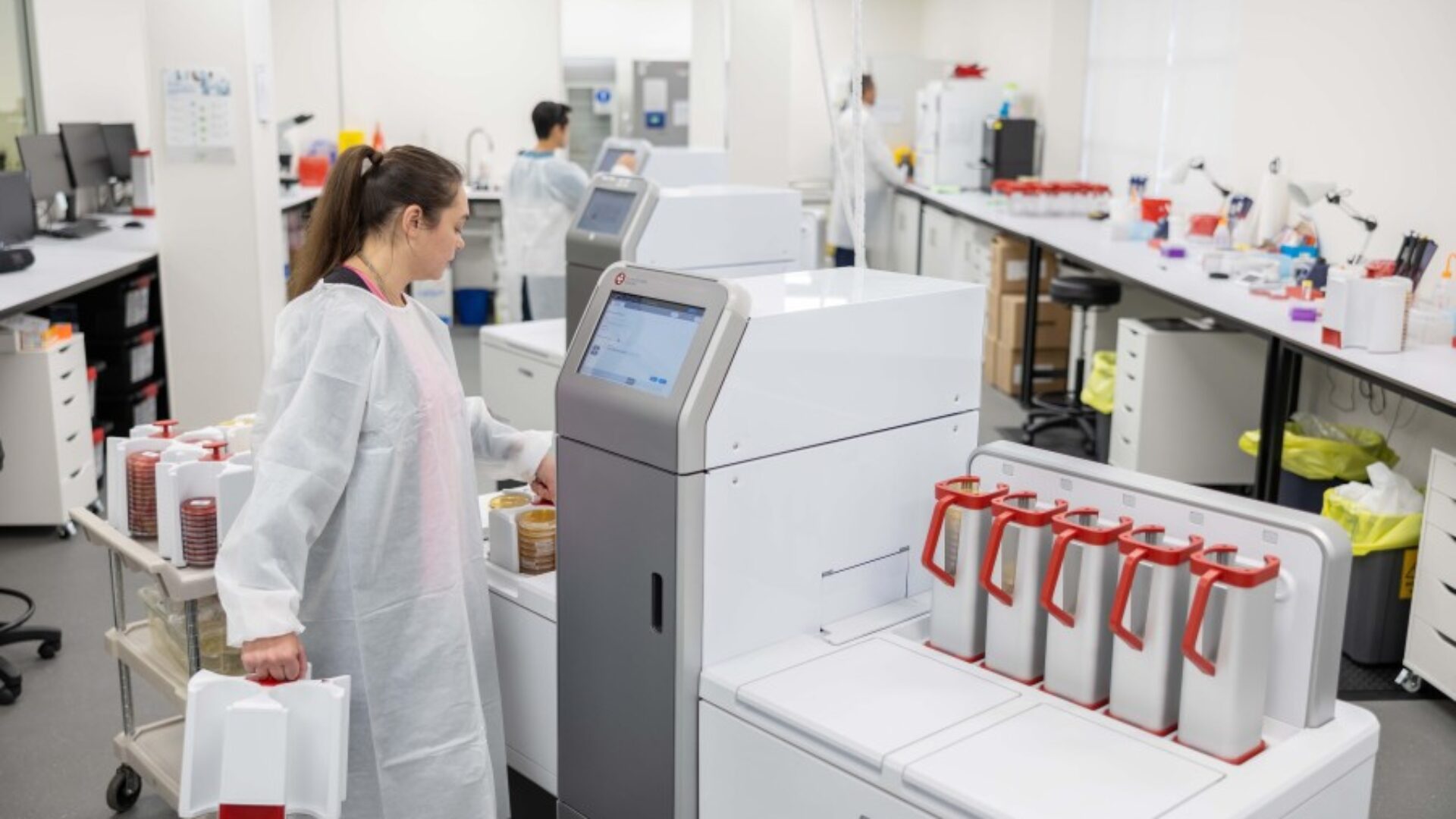
The company’s Automated Plate Assessment System (APAS®) was the first AI technology approved by the US Food and Drug Administration (FDA) for automated culture plate reading, cleared as a Class II in vitro diagnostic device for the reading of urine and MRSA cultures, now serving as the predicate device for all other equivalent technologies. The APAS Independence instrument can automatically image, detect and interpret bacterial growth at a rapid rate of 200 culture plates per hour, and is already improving efficiency in clinical laboratories around the world.
During the research and development (R&D) of its technology, CCS established a strong partnership with global analytical instrument and diagnostics leader Thermo Fisher Scientific. Thermo Fisher is currently the exclusive distributor of CCS’s APAS Independence across the US and select European markets. This strategic collaboration has enabled CCS to service clinical customers worldwide, reinforcing its position as a trailblazer in microbiology automation.
Building on its growing momentum, CCS was awarded $1.4 million by MTPConnect’s Clinical Translation and Commercialisation Medtech (CTCM) program – supported by program partner Cicada Innovations – to develop the APAS Compact, a smaller, more economical and accessible benchtop version of the APAS Independence. Reflecting CCS’s industry-driven approach, this initiative included a comprehensive market research report that incorporated insights from approximately 75 end users to shape the device’s user requirements.
A strategic pivot
Simultaneously, CCS identified a critical industry need that its technology was uniquely equipped to address: detecting contamination during the routine manufacture of sterile drug products.
Input from microbiologists is essential to ensuring the safe production of pharmaceuticals. Typically, two microbiologists are needed to review each environmental monitoring culture plate, as errors can result in significant costs – potentially up to $1 billion in lost revenue due to batch failures.1 Moreover, a 116 per cent increase in FDA regulatory observations2 regarding environmental monitoring has added new compliance challenges for drug manufacturers. A shortage of microbiologists further compounds this issue, with microbiologist job vacancy rates averaging 8 to 10 per cent in developed regions such as the US, Australia and the EU3.
CCS recognised these challenges as an opportunity to enter and expand into the pharmaceutical monitoring market. As already demonstrated within the clinical pathology market, its APAS technology automatically triages positive plates from negative plates. In sterile production environments, approximately 98 per cent of environmental monitoring culture plates are negative, so this technology would free up a significant portion of a microbiologist’s time to focus on positive results and deviations.
This efficiency boost can lead to laboratory productivity gains of 60 to 90 per cent. Recognising the potential of this innovation, pharmaceutical giant AstraZeneca partnered with CCS to develop an APAS analysis module software tailored for sterility monitoring during drug manufacturing.

APAS Independence in use at HSL, UK.
Accelerating hardware and software development
CCS was able to leverage the hardware and software it was developing for the APAS Compact device to support its expansion into this new market.
Through its CTCM project, CCS developed a new plate-handling system capable of processing both standard 90mm culture plates and smaller ~55mm contact plates used for pharmaceutical environmental monitoring. The team prototyped the APAS Contact Plate System in collaboration with engineering partner Planet Innovation.
Additionally, CCS enhanced its in-house capabilities in 3D printing, significantly reducing costs and accelerating timelines for hardware development. The final prototype has now been delivered to Planet Innovation to begin manufacturing the device in preparation for sale.
CCS also developed a new APAS analysis module for the contact plates, which it shared with customers for feedback and evaluation.
CCS’s Corporate Development Director Jack Brown said: “The CTCM program has allowed us to accelerate the development of our AI application for contact plates, ensuring we are delivering a complete solution for pharmaceutical environmental monitoring applications. The use of AI in this area is changing the way quality control microbiology laboratories are operating, freeing up resources to support the safe manufacture of drug products for patients.”
CCS conducted a formal validation study to gauge the performance of both the APAS Contact Plate Analysis Module against a panel of qualified microbiologists in assessing more than 20,000 culture plate images. The system successfully achieved all its performance targets in line with pharmacopeial guidelines, with a 0% false negative rate.
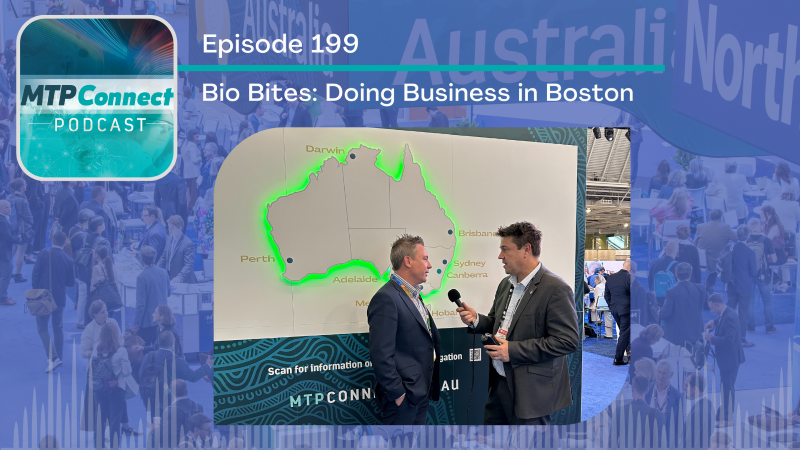
CCS CEO Brent Barnes at BIO 2025 in Boston chatting to MTPConnect CEO Stuart Dignam for the MTPConnect Podcast
Preparing for launch and global expansion
The company’s strategic pivot has proven highly successful – driving growth, increasing sales and establishing new relationships within the pharmaceutical sector. The work done within the CTCM project helped CCS foster valuable partnerships with global pharmaceutical companies, including AstraZeneca and Bristol Myers Squibb, for future technology development. Recently, NovoNordisk has also purchased an APAS Independence unit for evaluation, marking another milestone in CCS’s growing presence in the pharmaceutical sector.
“The development completed under the CTCM program has delivered a unique solution for pharmaceutical culture plate reading,” said CCS CEO and Managing Director Brent Barnes.
“The APAS technology is the only fully automated and validated system in the market able to read both 90mm and contact culture plates, providing us with a compelling differentiator for customers. We are already seeing the benefits of this and expect this to be a key commercial driver for the company over the next 12 months,” said Barnes.
The developmental leaps achieved by CCS during participation in the CTCM program have been instrumental in supporting the company’s transition from an R&D focus to a direct sales model.
In August 2025, CCS officially launched the APAS contact plate analysis module to market. . This milestone marks a crucial step forward in commercialising the technology within the pharmaceutical manufacturing sector and is expected to drive substantial sales growth and accelerate the company’s path to profitability.
You can hear more from CCS CEO Brent Barnes on the MTPConnect Podcast, episode 199 – Bio Bites: Doing Business in Boston.
1. www.researchandmarkets.com, Global Pharmaceuticals Market Report 2021: COVID -19 Impact and Recovery to 2030.
2. https://www.fda.gov/inspections-compliance-enforcement-and-criminal-investigations/inspection-references/inspection-observations
3. Medical Laboratory Observer 2021 Annual Salary Survey of laboratory professionals; Feb. 22, 2021