Australian Postgraduate Research Intern (APR.Intern) is Australia’s only national internship program for PhDs and Master by Research degrees spanning all sectors and disciplines. It plays a crucial role in accelerating STEM innovation, working with all universities nationally to streamline pathways for postgraduate research students to be industry-literate and career-ready; expand university research collaborations; and connect businesses with the country’s brightest emerging research talent.
Impactful internship opportunity supported by REDI initiative with benefits all round
This impactful internship opportunity was supported by MTPConnect’s REDI initiative, which awards eligible businesses a $10,000 rebate towards the cost of engaging a PhD student intern. There are benefits for both students and participating organisations; the three-to-six-month placements help businesses fast-track R&D, while students develop their skills and knowledge in a practical, industry setting. Eighty-two internships were supported by REDI.
One of the key advantages of these placements is that they facilitate greater interactions and understanding between academia and industry. PhD students bring cutting-edge research skills and specialised knowledge from their academic training and the internships provide the opportunity to apply this expertise to real-world industry challenges. This facilitates the transfer of knowledge and expertise between academia and industry, fostering collaboration and mutual learning.
The hands-on experience that the students gain is invaluable, giving them a deeper understanding of industry practices, priorities and constraints. By addressing industry challenges, they contribute to driving innovation and economic growth in key STEM sectors.
Access to valuable networking opportunities with industry professionals and potential employers
In addition, the internships give PhD students access to valuable networking opportunities, allowing them to establish connections with industry professionals, researchers and potential employers. PhD students gain comprehension of the commercialisation process and the pathways for translating research outcomes into marketable products and technologies, leading to the creation of partnerships, start-ups and spin-off companies that contribute to Australia’s innovation landscape.
Biotech start-up Inventia Life Science – a specialist in 3D cell culture bioprinting technology for drug discovery and biomed research company – has so far engaged eight PhD students through the APR.Intern program.
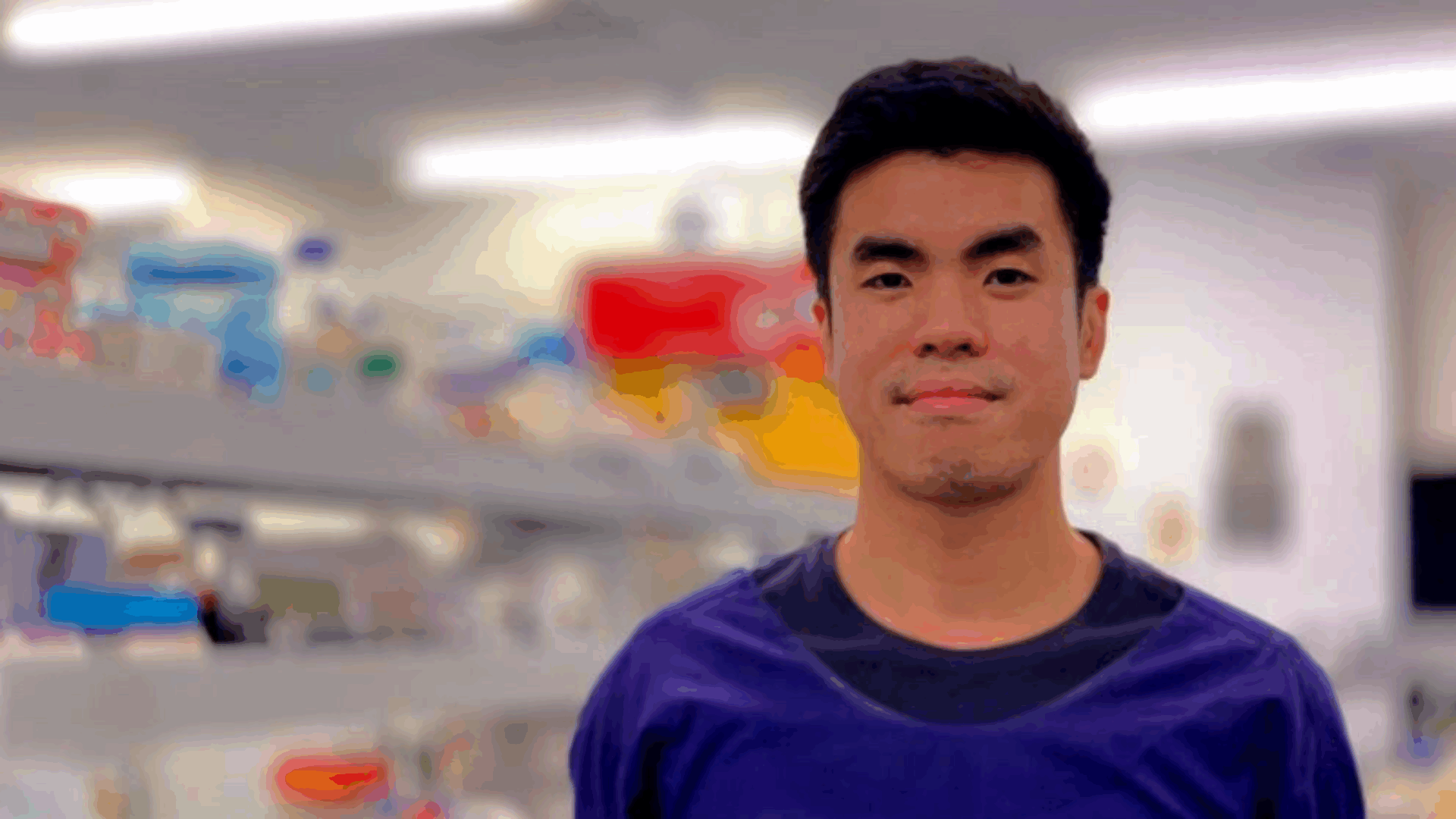
One former intern is Lionel Leck from The University of Sydney. During his placement at Inventia, he worked primarily with the R&D team, actively engaging with institutions and industry partners to develop and establish novel and highly functional advanced 3D cell models.
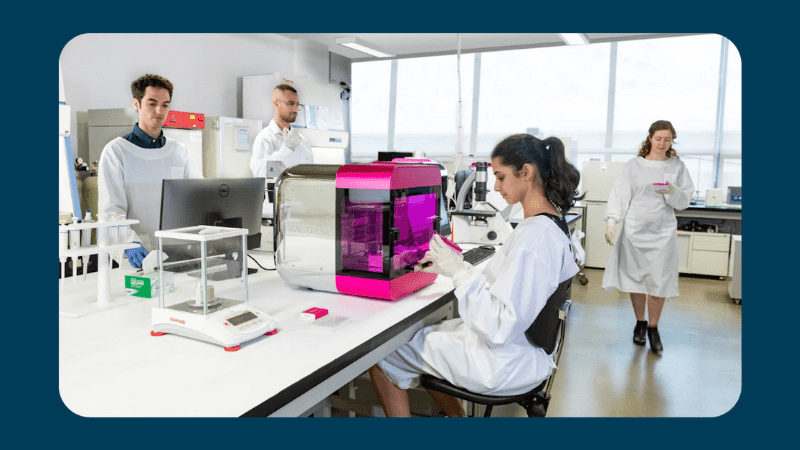
Biotech start-up Inventia Life Science is a specialist in 3D cell culture bioprinting technology for drug discovery and biomed research.
APR.Intern’s expertise and insights proved highly valuable to the team
Over a six-month period, Mr Leck played a key role in developing numerous cell models for Inventia’s clients, which were made available to customers during his internship. His expertise in cancer stem cells and his researcher-focused product insights proved highly valuable to the team. In addition to his primary role, he pitched and established a joint collaborative research project between Inventia and his PhD host institute, which was instrumental in conducting experiments for a research manuscript.
Mr Leck said the internship was an excellent learning platform that enhanced his adaptability, communication, problemsolving and project-management skills – all of which he considers to be essential for success in both academic research and industry settings.
“My most significant learning outcomes from this internship experience have been the substantial improvement of my communication skills and the ability to collaborate within multidisciplinary teams effectively. This internship has also provided me with opportunities to engage with stakeholders from diverse backgrounds, where I could actively contribute my ideas and experiences to the team,” Mr Leck said.
He also found the focus on creating solutions with real-world applications to be highly rewarding.
“The opportunity to conduct a product- and customer-focused approach to research and development vastly different from an academic setting, has also been a valuable aspect of my learning journey,” Mr Leck said.
Head of Life Science at Inventia, Dr Marie Besnier, said that during the six-month period with the company’s multidisciplinary R&D team, Mr Leck was instrumental in developing Inventia’s most advanced model.
“This model was made available to customers before the end of his internship. Lionel’s expertise in cancer stem cells and customer-centric product insights significantly contributed to our work,” Dr Besnier said.
Collaborating with universities nationally and engaging with high-end academic resources
The short-duration, results-driven nature of APR.Intern projects has allowed Inventia to collaborate with universities nationally and engage with high-end academic resources.
Access to research talent has likewise enabled the organisation to identify suitable interns who have an interest in joining industry and, following their graduation, Inventia has made seven full-time hires resulting from successful internship projects.
As demonstrated by Inventia’s experiences with the program, initiatives like APR.Intern contribute to a more robust R&D sector, which in turn delivers far-reaching economic benefits and ensures Australia remains a leader in nurturing innovation.
1. OECD Data: Gross domestic spending on R&D: https://data.oecd.org/rd/gross-domestic-spending-on-r-d.htm