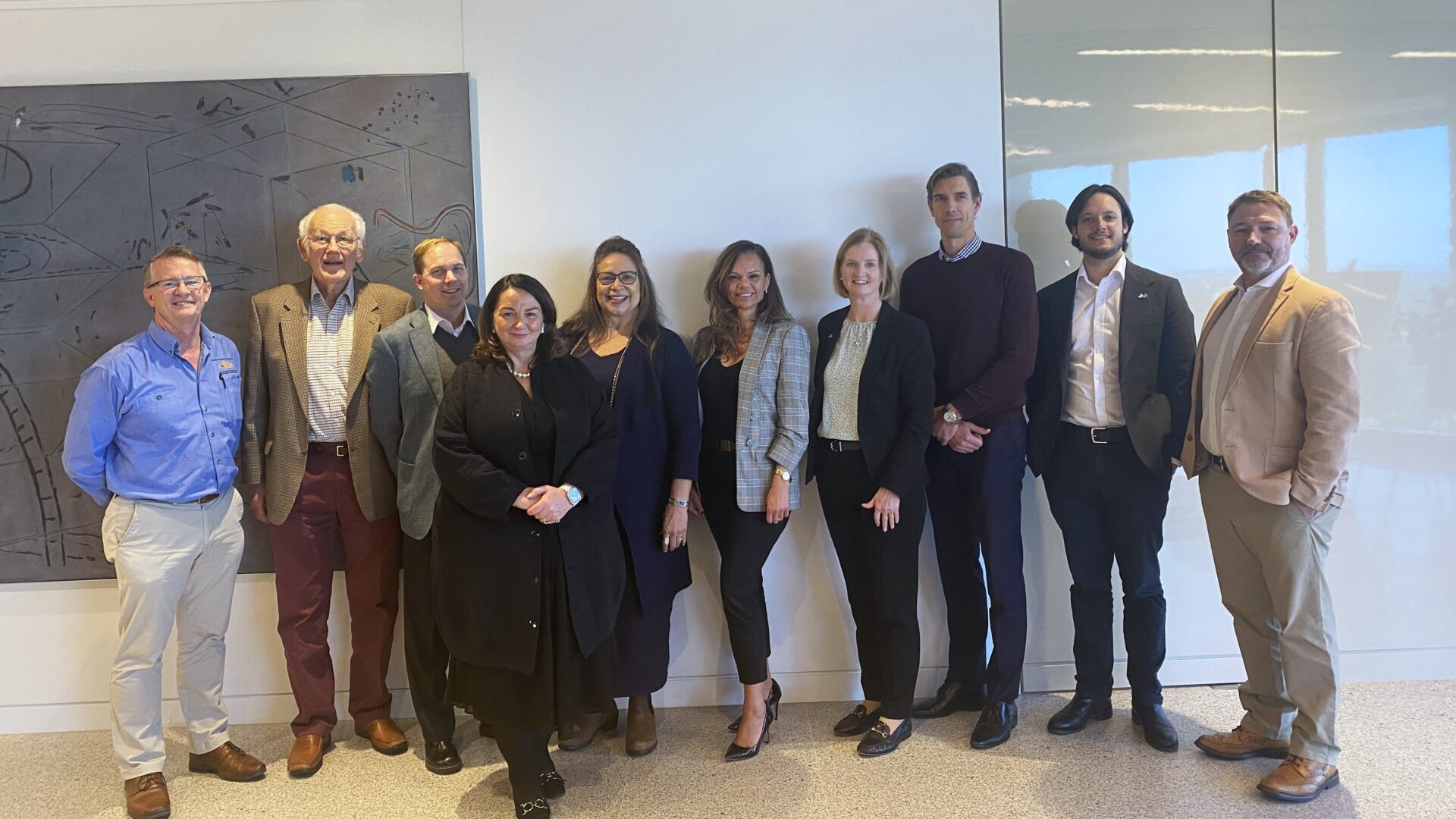
When UK-based startup Mari-One was invited to Australia under the UK-Australia Space Bridge in late 2023, they were seeking connection – to land in a place where their mission to deliver digital health equality could thrive. Mari-One’s founders, three-time founders in the sensor and satellite-enabled technology space, were on a journey to find like-minded partners committed to breaking down barriers in providing remote access for digital healthcare solutions currently in use across the globe. Combining state-of-the-art sensor fusion techniques from Mari-One, their aim was to deliver remote health monitoring into remote and rural communities in Phase 1 of their market entry strategy for Australia – which they found in Perth, Western Australia thanks to the WA Life Sciences Innovation Hub (WALSIH).
Mari-One’s specialty lies in integrating multiple sensors with medical grade biometric sensor systems to provide a holistic picture of individual health. Rather than viewing health data in silos, the aggregated data points are visualised via an intuitive user interface. Their preferred cloud platform connects satellite infrastructure and wireless sensors to deliver and visualise health data in real time.
“Our purpose, our mission, our quest in life, is to deliver digital health equality,” Mari-One CEO and Co-Founder Annette MacDougall said.
“It’s about delivering digital health solutions for those individuals in the world who, due to location, are not in close proximity to primary healthcare providers in a metropolitan area, or equally, if they are, that they can also benefit from a virtual ward solution closer to loved ones, where recovery can bring beneficial outcomes including shorter recovery periods out of the hospital environment,” she added.
Ms MacDougall says that the company has one question at the core of their operations, to focus on how to integrate technologies and apply artificial intelligence/machine learning together for effective, customised digital health solutions.
“We always consider: how do we marry one aspect of technology to another for one specific outcome?” Ms MacDougall said.
“There is a plethora of world-class wearable sensor technologies that are so advanced and are now available off the shelf, but not all are biomedically graded for healthcare environments. From the start of each project, we consider those best suited for specific health outcomes that benefit the patient and enable greater efficiencies for the healthcare provider, or clients seeking to monitor the health of their patients, or even employees, remotely.
“Together with our partners, we aim to collaborate towards co-design and solve genuine issues bringing greater results to accelerate digital health equality.”
Through the Space Bridge program, Mari-One’s Director and Co-Founder Jonathan Langlois met Professor Kevin Pfleger, WALSIH’s Director of Biomedical and Health Innovation. It was a pivotal moment, with WALSIH acting as a ‘concierge’ to help the international company access and connect with WA’s biomedical ecosystem. Professor Pfleger introduced Mari-One to WALSIH’s Director of Stakeholder Engagement, Dr Tracey Wilkinson, who quickly recognised the alignment between Mari-One’s mission and that of the Foundation for Indigenous Sustainable Health Limited (FISH).
As the largest geographical health system in the world covered by a single health authority, WA is an ideal place to develop and pilot digital healthcare solutions that improve equitable access to healthcare. Its remoteness, combined with its strong cultural and clinical research institutions, creates the right conditions for innovation and partnerships that support rural and Indigenous communities.
FISH is deeply embedded in this space, supporting sustainable Indigenous health through community-led programs focused on life skills, personal development, and creative expression. Grounded in cultural respect, FISH works in partnership with communities to deliver real and lasting impact.
FISH has been trialling digital health technologies in remote communities co-designed by Aboriginal community members, however the technologies were not integrated to provide a holistic picture of individual health.
When Mari-One and FISH met, it was a natural fit.
Mari-One’s ability to bring together technologies to create a comprehensive health profile for communities and individuals is particularly powerful for communities facing intersecting challenges like comorbidities, geographic isolation, lack of connectivity, and limited access to healthcare infrastructure.
The organisations were united by a shared focus on cultural respect, data sovereignty, and the principle of Indigenous healthcare led by Indigenous voices. Over 12 months of trust-building and yarning with community members, Mari-One and FISH developed a solid foundation that led to the signing of a Memorandum of Understanding in March 2025. The collaboration focuses on delivering co-designed, space-enabled digital health solutions for Aboriginal and Torres Strait Islander communities.
FISH CEO Mark Anderson said the way Mari-One approaches digital health aligns with FISH’s values.
“When we talk about health, we are talking about health in a holistic way – healthy heart, healthy mind, healthy body, healthy spirit, healthy family, healthy community, healthy land.
“Mari-One is also talking about health from a holistic perspective because you’re looking at everything, from environmental assessment and monitoring, through to physical and mental health assessment and monitoring – all of that information is coming into one platform to give you a really good diagnostic and understanding of all of the elements,” Mr Anderson said.
WALSIH’s Dr Wilkinson says that being a concierge-like touch point for the biomedical sector is an important and rewarding part of her role, connecting the innovation community, building capacity and new skills, and attracting investment and collaborations.
“WALSIH gets to engage with all sorts of different people and organisations who are dedicated to improving health outcomes in WA and around the world, from research and clinical services to startups and not-for-profits.
“Having a team like WALSIH that sits at the nexus of the ecosystem means that we can see across silos and identify a broad range of potential partnership opportunities.”
The partnership between Mari-One and FISH is already bearing fruit, with both organisations engaging in pilot projects and highlighting their work on national stages, including presentations to over 8,000 attendees at a recent international digital technology conference in Melbourne.
As Mari-One continues to build its presence in WA, they are continuing to explore and share their applications across new collaborations. In late August 2025, Mari-One signed an MoU with the University of Western Australia (UWA) that focuses on collaborative frameworks for digital health solutions for R&D purposes. This includes establishing a collaborative framework for advancing co-designed digital health technologies for remote Australian communities, particularly supporting the development of the proposed ARC Research Hub focused on Community-Orientated Biotechnology for Remote Australia.
UWA Associate Professor Dr Iyer Swaminatha Iyer, lead of the ARC Research Hub project, commenting that, “Mari-One Digital Health Architecture takes an agnostic and modular approach prior to the design and development stage, which attracted us from the onset. This approach, coupled with a measured level of flexibility to include ingenuity in the data modelling sequencing, creates opportunity for extending if specific applications are required in the co-design process for R&D purposes.
“Working collaboratively from the ground up, we have a shared view of the valued outputs we can explore together as we focus on key areas of research to include digital diagnostics and digital therapeutics against the backdrop of various environmental factors at any given time.”
Mari-One is now bringing investors and investment to Perth and tailoring its digital health technology for community-led and sector specific solutions. The company will extend its commitment to the market and set up an Australian office based at St. Georges Terrace Perth from October 2025. Additionally, the company is actively recruiting to support the appointment of local management teams focused on the Australian digital health market.
Against the backdrop of a thriving digital health ecosystem and assistance from WALSIH, Mari-One’s partnerships with FISH, and now UWA, represents a shared vision of equitable, culturally safe, and technologically advanced digital health solutions, which is benefitting Indigenous and non-indigenous communities in WA and beyond.