The Australian Antimicrobial Resistance Network (AAMRNet) is Australia’s leading multi-stakeholder expert group committed to combating the urgent global threat of antimicrobial resistance (AMR).
AAMRNet is a public-private partnership, established and operated by MTPConnect, Australia’s independent, not-for-profit life-sciences innovation accelerator, delivering on a key recommendation of the first in a series of reports Fighting Superbugs: A Report on the Inaugural Meeting of Australia’s Antimicrobial Resistance Stakeholders.
AAMRNet leverages MTPConnect’s networks, resources and its reputation as an independent and trusted voice for the sector, and brings together experts from industry, research, clinicians, patients and government to identify and tackle the challenges of AMR. Through its partnerships and engagement with key national and international stakeholders, AAMRNet is established as the key organisational contact point for access to Australian AMR expertise.
As the only body in Australia able to provide whole-of-sector representation, AAMRNet is uniquely placed to promote Australia’s role in the fight against AMR.
The Urgent Threat of AMR
AMR occurs when microbes such as bacteria and fungi become resistant to the drugs which once killed them – evolving into untreatable ‘superbugs’.
The World Health Organization (WHO) has declared it one of the top ten global public health threats facing humanity and has cautioned that it is possible that a “post-antibiotic era” may be coming, where minor infections – currently easily treated with common antibiotics – may become deadly.
Often described as a ‘silent pandemic’, AMR is already a leading cause of death worldwide. It was directly responsible for more deaths than malaria and HIV globally in 2019, when, in Australia, it was linked to over 5,000 deaths.
The Review on Antimicrobial Resistance estimates that around 10 million lives per year will be lost globally, and a cumulative US$100 trillion of economic output will be put at risk if no action is taken by 2050. The estimated annual impact of AMR on the Australian economy by 2050 will be between $142 – $283 billion.
AMR is also a serious threat to heath equity, as it disproportionately affects our most vulnerable. The burden of AMR being higher in aged care, women, children, indigenous and remote populations, and people with chronic underlying disease such as diabetes.
Climate change and global conflict are exacerbating the threat. Warmer temperatures and more frequent severe weather events, as well as populations displaced by climate change and global conflicts that are causing health system failure all promote the spread of drug-resistant infections.
Antimicrobials underpin all of modern medicine. AMR threatens our future capacity to perform medical procedures where antibiotics are the main line of defence, such as organ transplantation, cancer chemotherapy, diabetes management and major surgery.
Access to New Antimicrobials in Australia
Microbes are constantly evolving, meaning a robust pipeline of new antimicrobials in development is central to combating AMR. Yet, despite the urgent need, the WHO has deemed that pipeline is insufficient to tackle the rise and spread of AMR.
A key reason for this is a market failure that makes it not financially viable to invest in the development and commercialisation of new antibiotics. This has caused most venture capital companies and large pharmaceutical companies to exit the area. Small companies that have succeeded in bringing a new antibiotic to market face significant losses and ultimately, bankruptcy.
This is driven by a policy framework that does not recognise the true value of antibiotics. Currently, reimbursement is linked to sales volumes, but to protect their effectiveness, novel antibiotics are used sparingly, and only when all other treatments have failed or are inappropriate. When they are used, it is usually only for short periods, which limits sales further. They are also generally undervalued by reimbursement systems relative to the benefits they bring to society, resulting in a commercial return not sufficient to meet the costs of research and development, nor the commercialisation and ongoing post-marketing costs.
Addressing this market failure requires a critical balance of both ‘push’ incentives, that lower the cost of R&D, and ‘pull’ incentives, that provide a predictable return on investment and reward successful development.
AAMRNet is advocating for significant investment in three specific areas to help combat the urgent global threat of AMR and ensure Australians have access to the lifesaving, health system enabling medicines they deserve:

Establish an AMR-focused accelerator in Australia that will help translate research, upskill Australian researchers, and help strengthen and sustain the pipeline of new antimicrobial technologies.

Invest in a pilot subscription fund for novel antimicrobials to ensure Australians have access to the latest and most effective life-saving antibiotics, whilst at the same time supporting innovation.
Support regional preparedness and resilience against AMR through innovation and ensuring equitable access to antimicrobials in the Pacific region.
The Threat of AMR Calls for an Immediate Global Health Response
The WHO, in its Global Action Plan on AMR, urged countries to have in place their own national action plans, aligned with its own, to strategically counter AMR.
It highlights the need for improving awareness and communication around AMR, surveillance, infection prevention and antimicrobial stewardship. It also calls for countries to increase investment in new medicines, diagnostic tools and vaccines.
The G7 has increasingly acknowledged the importance of ‘pull’ incentives, making increasingly strong calls for its member countries to strengthen preparedness against AMR.
Several countries around the world are implementing or exploring their own ‘pull’ incentives, including the UK which has undertaken a successful reimbursement pilot which considers additional values that antibiotics provide to society. These values are known as the STEDI Values of Antibiotics and include Spectrum value, Transmission value, Enablement value, Diversity value and Insurance value. The UK pilot has shown significant value for England and has now been expanded.
In Australia, the Australian Government House of Representatives Standing Committee on Health, Aged Care and Sport’s 2021 report, The New Frontier – Delivering better health for all Australians outlined several initiatives for targeted action to address the growing threat of AMR, including the need for effective funding and the establishment of a pilot scheme for new antimicrobials. Similarly, the Health Technology Assessment Policy and Methods Review has made clear recommendations to improve access to antimicrobials for Australian patients.
In May 2022, through the efforts of its working group on pricing and funding, AAMRNet developed the ‘AAMRNet Position Statement: Pricing and reimbursement of novel antimicrobials in Australia‘, highlighting innovative strategies for bringing new antibiotic treatments to market and aimed at stimulating discussion and spurring action.
It canvases ways to stimulate research and development for new treatments, novel reimbursement approaches to support and ensure a continuing pipeline of novel therapies and the merits of a pilot Australian fund to provide access to new antimicrobials and support their appropriate use
MTPConnect Secures Australian Representation on WHO Task Force on AMR
The Australian Antimicrobial Resistance Network (AAMRNet), MTPConnect’s AMR initiative, has been selected to join the World Health Organization (WHO) Civil Society Task Force on Antimicrobial Resistance.
The Task Force will support and strengthen the WHO’s engagement with non-government organisations, foster collaborations, build capacity and amplify the voices of communities affected by AMR.
The move recognises AAMRNet’s leadership role in Australia and the broader Asia Pacific region.
AARMNet joins 80 other organisations from around the world on this new WHO task force, MTPConnect’s Andrew Bowskill (AAMRNet co-chair) has been selected for the 12-member steering committee.
Read our announcementFighting Superbugs: The Path Forward - a new report
In Australia, recent policy reviews, notably the Health Technology Assessment (HTA) Policy and Methods Review, Accelerating Access to the Best Medicine for Australians Now and into the Future, have highlighted the need for a pilot subscription funding model to enable accessibility to new and novel antimicrobials, and to incentivise their development.
In response, a roundtable was convened in Canberra in November 2024, hosted by the Australian Antimicrobial Resistance Network (AAMRNet) and MTPConnect, and facilitated by Evohealth. Made up of 35 leaders in infectious disease management, from government, research, clinical practice and industry, its goal was to develop a consensus on the design and implementation of an Australian pilot program, drawing on insights from global examples, particularly the recent experience of the United Kingdom (UK).
This new report provides a summary of the discussion at the Antimicrobial Subscription Model roundtable with considerations and next steps synthesised and summarised.
Download reportMTPConnect Podcast Features NHS England’s David Glover
To mark the Antimicrobial Subscription Model roundtable, the MTPConnect Podcast conducted an interview with David Glover, Assistant Director of Medicines Analysis at NHS England who joined the roundtable to explain the UK model in detail.
Listen to episode 185, How the UK’s Subscription-Style Model is Improving Access to Much-Needed AntibioticsResources
News

AAMRNet’s Pre-Budget Submission on AMR Action Package
MTPConnect’s AMR initiative, AAMRNet, has lodged a pre-budget submission to the Commonwealth Treasury calling for investment in an AMR Action Package.
Read MoreNews
MTPConnect Secures Australian Representation on World Health Organization Task Force on AMR
The Australian Antimicrobial Resistance Network, MTPConnect’s AMR initiative, has been selected to join the WHO Civil Society Task Force on Antimicrobial Resistance.
Read MoreReports

News

News

News

Reports
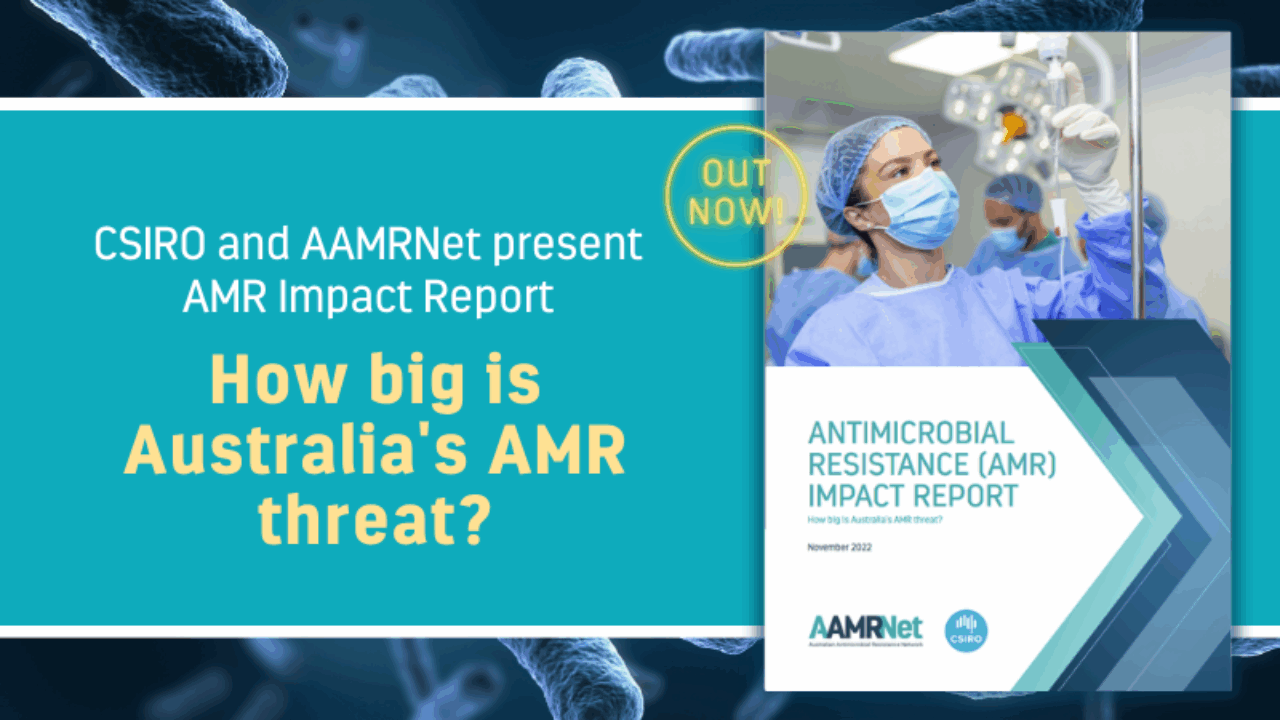
Antimicrobial Resistance Impact Report: How big is Australia’s AMR threat?
MTPConnect, through the Australian Antimicrobial Resistance Network (AAMRNet), and the Commonwealth Scientific and Industrial Research Organisation (CSIRO) combined resources to develop this report to improve …
Read MoreNews resources
Visit our News page and select AAMRNet to discover news stories, case studies, podcasts and reports!
Consortium
AMRNet is supported by industry contributions from: Pfizer ANZ, CSIRO, GSK Australia, Recce Pharmaceuticals, MSD Australia, Botanix Pharmaceuticals, SpeeDx, Medicines Australia, Tenmile, Biointelect, Monash Centre to Impact AMR and Bugworks Australia (supported by industry contributions).
Additional Australian and international partners of the AAMRNet include: AusBiotech, BiomeBank, Centre for Environmental and Agricultural Solutions for Antimicrobial Resistance (CEAStAR), Clever Culture Systems, Combating Antibiotic-Resistant Bacteria Biopharmaceutical Accelerator (CARB-X), Community for Open Antimicrobial Drug Discovery (CO-ADD), Health Security Systems Australia (HSSA), Epichem, Formulytica, GARDP, Incubator for Antibacterial Therapies in Europe (INCATE), Kraken Coding, Lindo, Lixa, Menzies School of Health Research, Microbio, Monash Biomedicine Discovery Institute, NanoScout, RESULTS International Australia, Roche Diagnostics Australia and the University of Auckland.
Connect with AAMRNet
Join AAMRNet, by contacting MTPConnect.
Follow AARMNet on LinkedIn