Targeted Translation Research Accelerator (TTRA) for Diabetes and Cardiovascular Disease
Since 2020, MTPConnect has been delivering the inaugural $47 million TTRA program for diabetes and cardiovascular disease on behalf of the Medical Research Future Fund.
The inaugural TTRA program is providing a new integrated research program to improve the prevention, management and treatment of diabetes and cardiovascular disease (D&CVD) in Australia. Research efforts focus on the most pressing areas of unmet clinical and research needs in D&CVD, which are leading causes of death and disability in Australia.
The inaugural TTRA program has:
- Established Research Centres for diabetes and cardiovascular disease
- Established a contestable Research Project funding program supporting D&CVD research projects in partnership with ANDHealth, AusHSI, Lowitja Institute, MDPP and Uniquest
- Promotes the clinical and commercial translation of innovative therapeutics, diagnostics, devices and digital solutions for D&CVD
The program stimulates collaboration across relevant clinical, research and industry organisations and leverages strengths across the sector to ultimately produce novel preventative interventions, diagnostics, medical devices, therapeutics and digital health approaches and products for D&CVD that reduce the burden on patients, families and communities.
The TTRA Expert Advisory Board brings deep expertise around commercialisation, diabetes and cardiovascular disease advocacy, lived experience, clinical and research perspectives and the investment viewpoint to the governance of the program.
The inaugural TTRA program is designed to support and incentivise translation as a natural course of activity for those who applied and received funding. This is delivered through extensive mentoring, commercialisation and implementation advice and other capacity and capability building activities.
New TTRA Drugs and Devices Investment
In July 2024, MTPConnect was selected to deliver a new $28.5 million investment for Drugs and Devices, injecting much-needed funding and support for Australian small to medium enterprises (SMEs), and which builds on the legacy of the inaugural research accelerator program. The objective is to accelerate development and commercialisation of promising drugs and medical devices into products that can reduce the burden of cardiovascular disease and complications of diabetes for patients, carers, families, and community. This is delivered in collaboration with Impact Partners CSL and Roche Diagnostics Australia who bring additional industry, market and commercialisation expertise.
New resources
Visit our News page and select TTRA to discover news stories, case studies, podcasts and reports!
TTRA ResourcesTTRA Interim Impact Report
A report published by MTPConnect in February 2024 demonstrates that the TTRA program had delivered benefits and novel health solutions for Australian patients and the health sector – just over halfway through its duration.
The report, ‘Transforming health outcomes for diabetes and cardiovascular disease in Australia – Interim report on impacts of the first Targeted Translation Research Accelerator’, captures the achievements to date of the two national Research Centres established – the Australian Centre for Accelerating Diabetes Innovations (ACADI) and the Australian Stroke and Heart Research Accelerator (ASHRA) – and the 22 individual Research Projects funded, which have been collectively awarded $38.3 million in competitive funding.
Read the reportTTRA Interim Impact Report 2024
TTRA Round 3 Needs Assessment & Prioritisation Discussion Paper
Resources
News

Australian Biotechs Join Biocom’s Annual Global Partnering and Investor Conference
Four emerging Australian biotechs from our inaugural TTRA initiative are in the US securing partnering meetings and getting great feedback
Read MoreNews
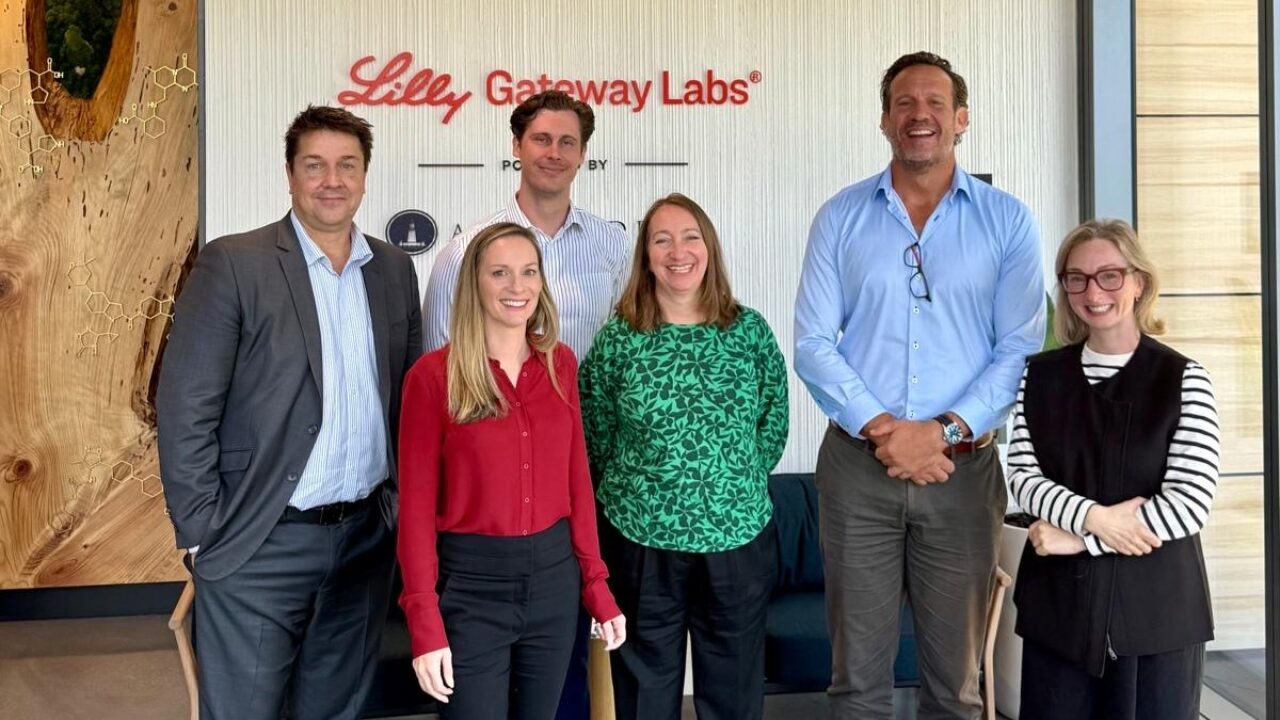
TTRA Delegation Hits San Diego To Make Connections for Diabetes and Cardiovascular Innovations
Find out why we are in sunny San Diego hosting a delegation of innovative companies from our inaugural Targeted Translation Research Accelerator initiative.
Read MoreNews
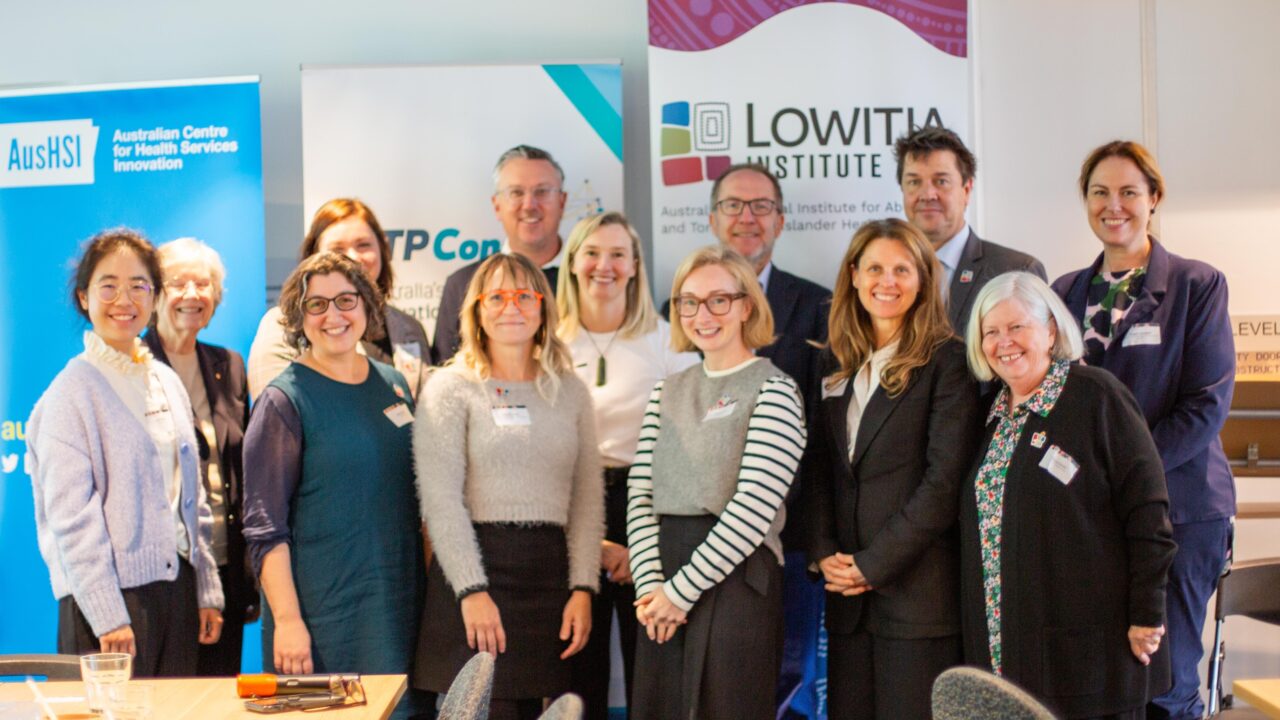
First Nations Forum Explores Sustainability Models for Diabetes and Cardiovascular Disease
MTPConnect co-hosted the forum, with TTRA program partners the Lowitja Institute and AusHSI, ‘Exploring sustainability models for Aboriginal and Torres Strait Islander research in diabetes and cardiovascular disease’ at the Koorie Heritage Trust in Naarm, Melbourne.
Read MorePodcasts

205. Dr Jordan Nguyen on Purpose-Driven Technology Solutions for Better Health
Dr Jordan Nguyen – world-renowned AI and biomedical engineer and inventor, joins the MTPConnect Podcast to discuss innovations in disability and aged care from his social business Psykinetic, creating inclusive technologies with positive and life-altering impact.
Listen to PodcastNews

Case Study
Case Study
Podcasts

186. Heart and Soul: Dr Daniel Timms on Creating the First Successful Total Artificial Heart
We meet Dr Daniel Timms, the Australian biomechanical engineer behind BiVACOR who has dedicated his life to developing a titanium …
Listen to PodcastNational Research Centres for Diabetes and Cardiovascular Disease
In January 2022, two new national Research Centres, the Australian Centre for Accelerating Diabetes Innovations (ACADI) and the Australian Stroke & Heart Research Accelerator (ASHRA) were established through the support of Commonwealth funding under the TTRA initiative which forms part of the Medical Research Future Fund (MRFF).
ACADI and ASHRA are accelerating therapies towards clinical practice for the prevention, diagnosis, treatment and management of disease-related complications for sector-identified priorities associated with diabetes or cardiovascular disease, respectively.
ACADI and ASHRA received $10 million of TTRA funding over four years to establish the Research Centres with substantial co-contributions from academic and industry partners. It is anticipated that each Research Centre will become self-sustainable with continued financial viability and talent management of the entity beyond the four years of TTRA funding.
In addition to research and development, each Research Centre has a training program to support students and early-to-mid career researchers and clinicians to strengthen and grow capability and capacity in the sector.

Research projects

TTRA Round 1 Research Projects address one of the following Priority Areas:
- Priority 1: Mental health conditions in people living with at least two of the following: Type 1 diabetes, Type 2 diabetes and/or cardiovascular disease.
- Priority 2: Chronic kidney disease in people living with at least two of the following: Type 1 diabetes, Type 2 diabetes and/or cardiovascular disease.
- Priority 3: Cardiac and vascular complications arising in people living with diabetes (Type 1 or Type 2) and cardiovascular disease; OR Cardiovascular disease in people living with Type 1 diabetes and insulin resistance (double diabetes).
TTRA Round 1 Research Projects recipients announced on 23 September 2021 are:
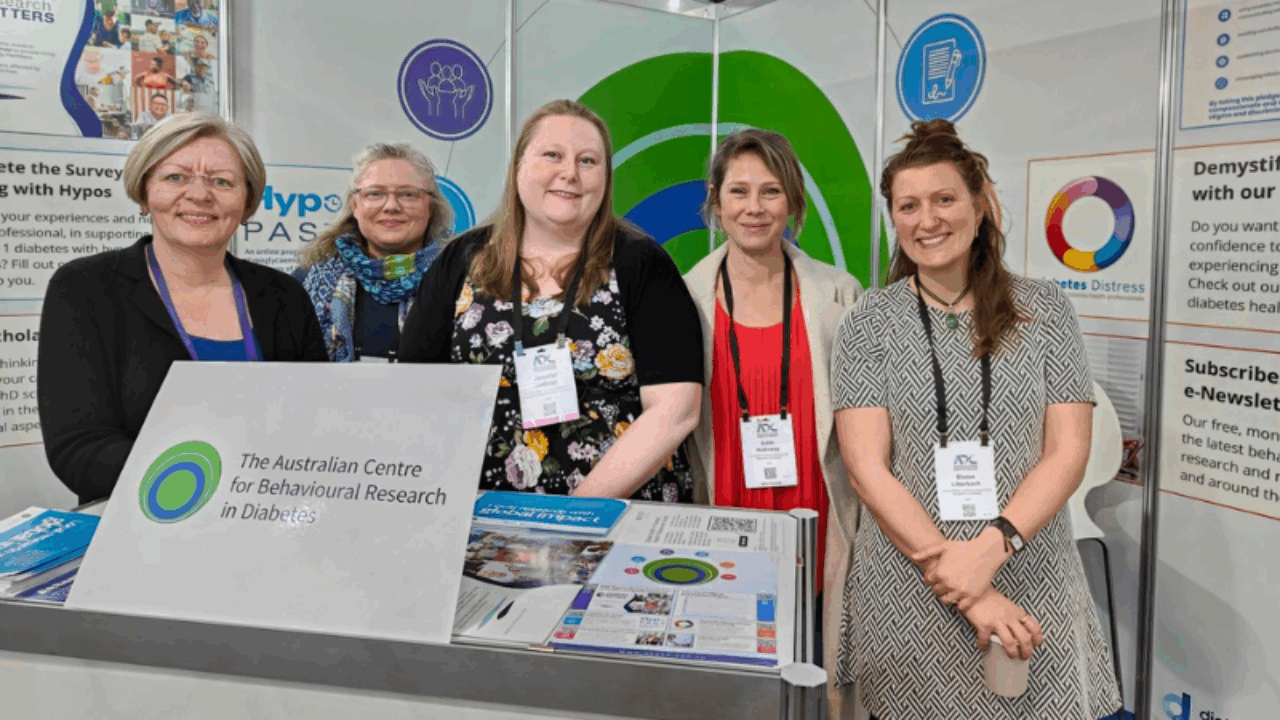
- Deakin University’s Australian Centre for Behavioural Research in Diabetes, Victoria, $748,384 award Low Intensity mental health Support via a Telehealth Enabled Network (LISTEN) for adults with diabetes and CVD: Effectiveness and scalability
- Heart Research Institute and University of Sydney, NSW, $750,000 award Development of novel safe adjunctive antithrombotic therapies for the improved treatment of acute ischaemic stroke
- Inosi Therapeutics Pty Ltd, Victoria, $704,230 award Lead optimisation of novel inhibitors of IRAP for the treatment of fibrosis in diabetes-induced renal and cardiovascular disease
- Nirtek Pty Ltd, Victoria, $750,000 award NIRAF Guidewire for Detection of Unstable Coronary Plaques to Prevent Heart Attack and Death
- Queensland University of Technology, Queensland, $745,623 award Towards a diagnostic tool for atheroma assessment to better manage vulnerable patients
- University of Melbourne, Victoria, $749,981 award Future Health Today and Torch Recruit: Changing the course of chronic disease
- University of Sydney, NSW, $739,128 award Local Regulation of Inflammation for the Treatment of Peripheral Arterial Disease
TTRA Round 1 Funding:
Round 1 funding announced in September 2021: Read the announcement.
TTRA Round 2 Research Projects address one of the following Priority Areas:
- Priority 1: Atherosclerosis, including cerebrovascular disease
- Priority 2: Cardiomyopathy and heart failure
- Priority 3: Obesity as it relates to diabetes
- Priority 4: Mental health as it relates to diabetes
- Priority 5: Glucose control in type 1 diabetes (T1D), type 2 diabetes (T2D), double diabetes and/or gestational diabetes mellitus (GDM)
TTRA Round 2 Research Projects recipients announced on 21 October 2022 are:
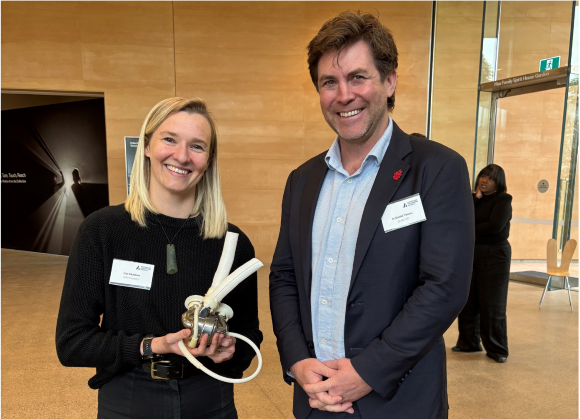
- BiVACOR Pty Ltd, QLD, $750,000 award to develop a new, more portable external controller to allow long-term use with its BiVACOR total artificial heart
- Cardihab Pty Ltd, QLD, $740,153 award to advance its platform and patient-centric smart phone-based app, providing personalised healthcare delivery to improve heart failure outcomes
- Cyban Pty Ltd, VIC, $700,000 award to apply its innovative brain pulse oximeter technology, as a point of care monitor for earlier detection and treatment of stroke in a hospital setting to prevent long term disability and death
- Deakin University, VIC, $749,764 award to trial an online education program for prevention, awareness of symptoms, and treatment to reduce hypoglycaemia-related anxiety and improve mental health outcomes in adults with type 1 diabetes
- Garvan Institute of Medical Research, NSW, $749,979 award to conduct a first-in-human safety and efficacy trial using genetically engineered islet cells to restore glucose in type 1 diabetes
- Monash University, VIC, $750,000 award to develop a novel adjunctive peptide therapy to lower insulin doses for improved glucose control in the treatment of type 1 diabetes
- University of Sydney, NSW, $750,000 award to bring oral insulin to phase I clinical studies using a novel quantum dot drug delivery platform
- University of Sydney, NSW, $749,536 award to progress novel small molecule therapeutics targeting the inflammatory contribution to atherosclerosis, stabilising plaque and preventing heart attack
- Western Sydney University, NSW, $744,873 award to trial a clinically validated Care Portal providing access to peer support, mental health support and clinical care, empowering young Australians to live well with diabetes
TTRA Round 2 Funding:
Round 2 funding announced in October 2022: Read the announcement.

The Targeted Translation Research Accelerator (TTRA) program’s Round 3 Research Projects develop or progress innovative preventative, diagnostic, therapeutic and/or disease management products, services and/or models of care for diabetes and/or cardiovascular disease (D&CVD) to address one of the following Priority Areas:
- Priority 1: Strengths-based perspectives to chronic disease – A need to adopt a strengths-based perspective to chronic disease, which builds and develops the existing strengths, skills and capacities of Aboriginal and Torres Strait Islander peoples.
- Priority 2: Culturally safe programs and supports – Development of culturally safe programs and supports for D&CVD prevention and promotion of ‘healthy lifestyles’ among Aboriginal and Torres Strait Islander peoples, using empowering, evidence-based, health promotion campaigns.
- Priority 3: Culturally safe strategies to address cardiometabolic disease – Culturally safe strategies to address cardiometabolic disease / risk factors to improve the health of Aboriginal and Torres Strait Islander women prior to and during pregnancy. This should also include a focus on babies through the life course, including management of women with pre-existing and gestational diabetes.
TTRA Round 3 Research Projects recipients announced on 27 October 2023 are:
- The Australian National University, South Australia/Australian Capital Territory, $998,685 award Aboriginal women working to reduce risk of diabetes and cardiovascular complications in pregnancy
- Menzies School of Health Research, Northern Territory, $995,324.63 award ‘Doing it together’- innovative peer-support and peer-led education for Aboriginal and Torres Strait Islander youth living with type 2 diabetes
- Nunyara Aboriginal Health Service Inc, Whyalla, South Australia, $999,600 award The Nunyara cardiometabolic screening and complication model: a three-pronged community-led strategy to achieving comprehensive Aboriginal primary preventative care
- The Peter Doherty Institute for Infection and Immunity, University of Melbourne, Northern Territory/Victoria, $999,670 award Marrtjin limurr rrambaŋin (Walking Together): co-designing innovative, culturally adapted methodologies to improve heart health in remote communities in North-East Arnhem Land
- The University of Queensland, School of Public Health, New South Wales/Queensland, $999,873.80 award The Diabetes Using Our Strengths Service (DUOSS)
- Victorian Aboriginal Community Controlled Health Organisation Inc, Victoria, $994,789.82 award Chronic Disease Prevention through the Culture+Kinship Model: A strength-based prevention approach based on Aboriginal Culture, Kinship, Community, and Country.
TTRA Round 3 Funding:
Round 3 funding announced in October 2023: Read the announcement.
To watch the webinars, head to our News page, select type ‘webinar’ and topic ‘TTRA’.
Read the TTRA Round 3 Priority Setting Discussion Paper.
Indigenous Led Priority Setting
The Indigenous-specific priority areas for this third and final round of TTRA Research Projects funding was designed to deliver real benefit for health and wellbeing of Aboriginal and Torres Strait Islander communities. The areas were determined through a prioritisation project led by the Lowitja Institute – a community-controlled organisation and Australia’s National Institute for Aboriginal and Torres Strait Islander Health Research.
Partnering with the Lowitja Institute has ensured that the voices of Aboriginal and Torres Strait Islander communities were centred in every aspect of the process of determining the Indigenous-specific priority areas.
As part of this process, the Lowitja Institute and MTPConnect have published a discussion paper title ‘Targeted Translation Research Accelerator Needs Assessment and Prioritisation Project’ which provides a framework for how Indigenous-led priority setting can inform important funding decisions. Find out more.
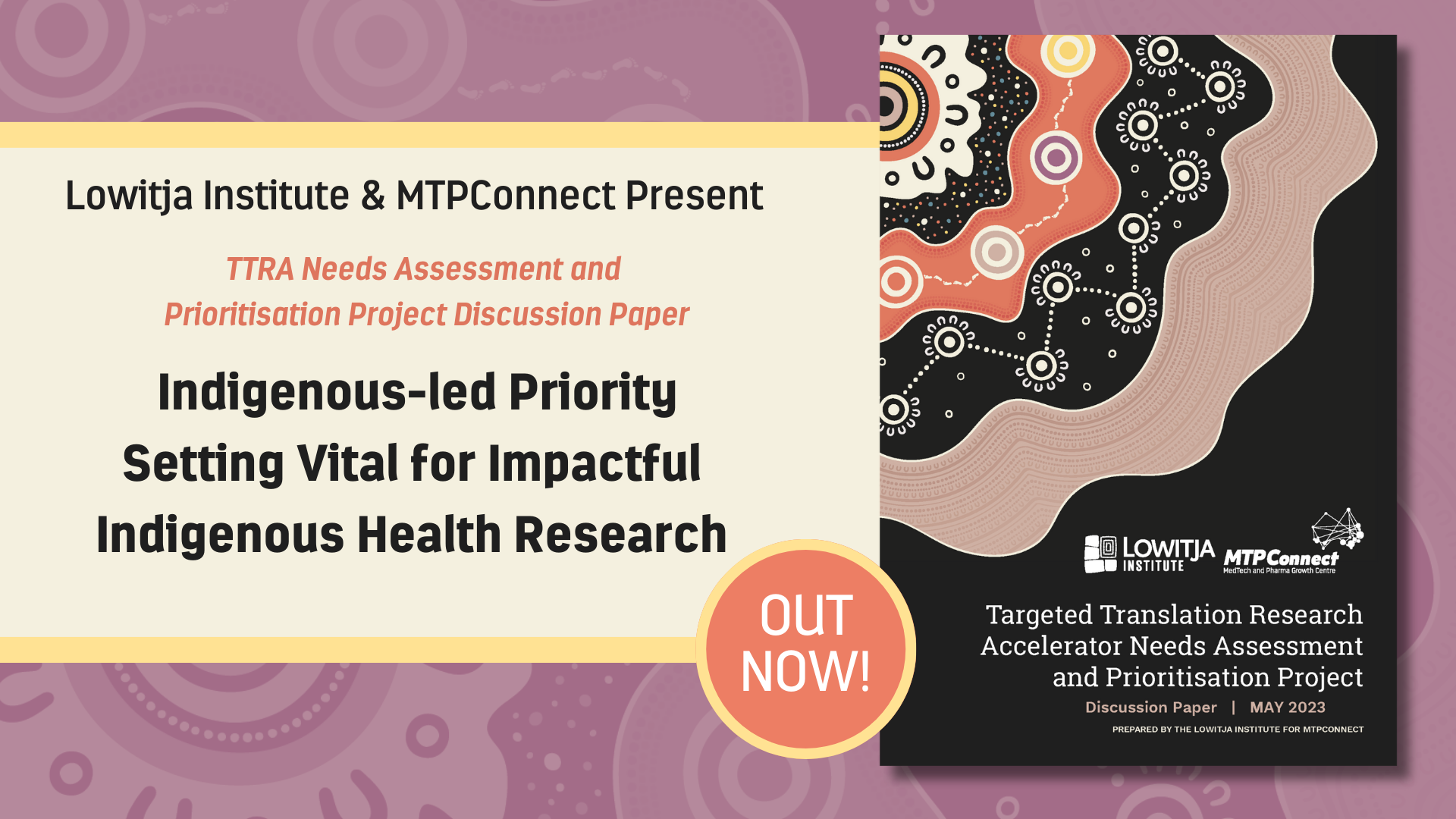
The report can be downloaded here or from the Lowitja Institute Publications page.
TTRA Indigenous Advisory Group
For Round 3, MTPConnect engaged the TTRA Indigenous Advisory Group to guide the design and delivery of a process to identify Indigenous-specific priority areas that could maximise the impact of the available funding. MTPConnect is honoured to be supported by this group, including prominent Indigenous researchers, clinicians and thought leaders, as well as representatives from organisations that have deep engagement with Aboriginal and Torres Strait Islander communities through direct healthcare delivery:
- Professor Alex Brown, Professor of Indigenous Genomics, Australian National University | Telethon Kids Institute
- Dr Fergus Gardiner, Director, National Emergency Response, Public Health and Research, Royal Flying Doctor Service of Australia
- Professor Lisa Jackson Pulver AM, Deputy Vice-Chancellor, Indigenous Strategy & Services, University of Sydney, and Professor Public Health and Epidemiologist, Sydney Medical School
- Ray Kelly, Indigenous Allied Health Australia
- Chris Lee, Assistant Director – Programs, National Aboriginal Community Controlled Health Organisation (NACCHO)
- Professor Ray Mahoney, Professor of Aboriginal and Torres Strait Islander Health and Discipline Lead for Population Health, Visiting Scientist, Australian eHealth Research Centre (AeHRC), CSIRO, College of Medicine & Public Health, Flinders University
- Dr Janine Mohamed, CEO, Lowitja Institute
- Dr Simon Quilty, Medical Advisor, Purple House (Western Desert Nganampa Walytja Palyantjaku Tjutaku Aboriginal Corporation)
- Dr Tanya Schramm, Senior lecturer of Aboriginal and Torres Strait Islander Health Education, University of Tasmania
- Dr Sean Taylor, Executive Director Aboriginal Health & Diversity, NT Health; Deputy Director Indigenous Leadership and Engagement, Menzies School of Health Research; and Adjunct Associate Professor, Public Health and Tropical Medicine, James Cook University.
It is important to note, MTPConnect has carefully managed any potential conflicts of interest. Indigenous Advisory Group members were eligible to apply for Round 3 unless they had been involved in the subcommittee that had designed the application process and guidelines.

Artwork used in image above by Ngarrindjeri artist, Jordan Lovegrove, shows the growing ripple effect that Aboriginal and/or Torres Strait Islander-led research has on health and wellbeing. See ‘More about the artwork’ below.
More about the artwork featured above and in the TTRA Round 3 image tiles:
The artwork by Ngarrindjeri artist, Jordan Lovegrove, shows the growing ripple effect that Aboriginal and/or Torres Strait Islander-led research has on health and wellbeing. The big meeting place in the centre represents Lowitja Institute and MTPConnect. The smaller coloured meeting places connected by footprints that surround it represents our connection and work with Aboriginal and Torres Strait Islander communities and other partners. The other small meeting places with pathways between, represent the communities that this research positively impacts. MTPConnect is pleased to licence this artwork from Lowitja Institute for the purposes of promoting TTRA Round 3 activities.
TTRA Research Projects Round 3 Webinar Series
To coincide with the launch of TTRA Research Projects Round 3, MTPConnect hosted a series of webinars to highlight key elements of Aboriginal and Torres Strait Islander health research. This series is intended for anyone with a broad interest in Aboriginal and Torres Strait Islander health research but may also provide potential applicants with key elements to consider when building their projects and teams.
The first webinar in the series was held in November 2022 and focused on ‘Principles of Aboriginal and Torres Strait Islander health research and engaging meaningfully with community’; the second webinar in the series on ‘Ethics and Reciprocity’ was held in February 2023, and the third webinar on ‘Implementation Science’ was held in March 2023. You can watch recordings of all webinars here. The webinars are also available to listen to on the MTPConnect Podcast – episodes 142, 147 and 149 respectively.